A House Divided
Flora Cooke, her father, her husband, and the war that divided them.

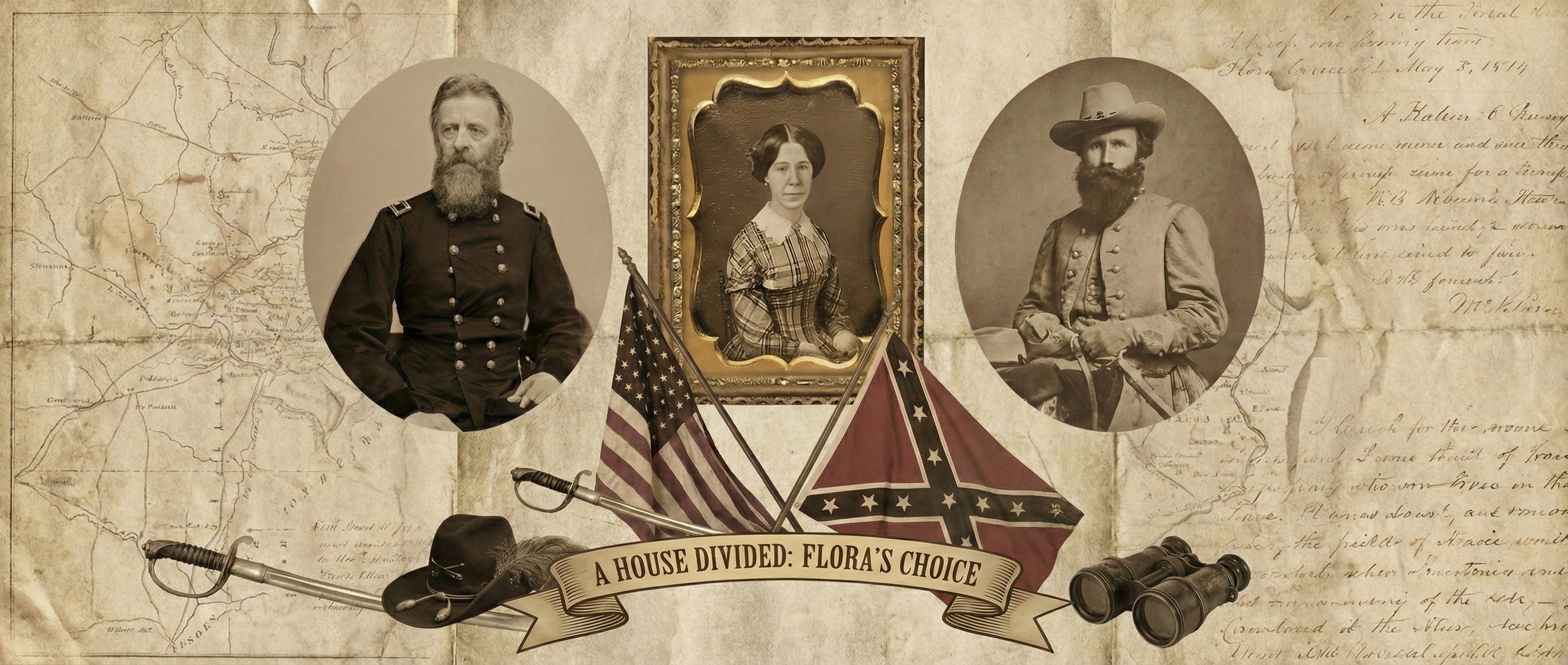
They call the Civil War a conflict of “brother against brother.” But for Flora Cooke Stuart, the battle lines were drawn right through the center of her heart. On one side stood her father, the man who raised her. On the other, her husband, the man she adored.
Flora’s father, General Philip St. George Cooke, was the “Father of the United States Cavalry.” A lifetime military man, his loyalty remained with the Union when his native Virginia seceded in April 1861.
Her husband, the dashing and legendary James Ewell Brown Stuart, chose the Confederacy. Of his father-in-law’s decision, Stuart famously remarked:
“He will regret it only once, and that will be continually.”
The rift was so deep that when the war broke out Flora and JEB’s infant son, originally named Philip St. George Cooke Stuart to honor her father, was quickly renamed James Ewell Brown Stuart Junior.
Stuart, known as JEB to his friends, was perhaps the greatest cavalry commander on either side of the Civil War. A disciple of Robert E. Lee at West Point, he was a master of reconnaissance. During the Peninsula Campaign, Stuart made a daring move to encircle the entire Union force, humiliating the very command held by his father-in-law, Philip Cooke. The defeat led Cooke to withdraw from field service for the remainder of the war.
Stuart’s brilliance was defined by the men he trusted. During the Overland campaign, he accepted a young teenage Virginian named John Omohundro as a scout and spy. Omohundro—who would later find fame as “Texas Jack”—became Stuart’s shadow, carrying vital dispatches and infiltrating Union camps.
It’s easy to see Stuart’s influence on the boy; years later, Texas Jack would wear the same long ostrich feathers in his hatband that Stuart had made famous on the battlefield.
On May 12th, 1864, at the Battle of Yellow Tavern, the legend met its end. Omohundro delivered a final dispatch to Stuart, who then wheeled his warhorse, Skylark, to lead a countercharge against General George Armstrong Custer’s 5th Michigan Cavalry.
As the Union forces retreated, a lone private fired a parting shot. The bullet struck Stuart in his left side. As the ambulance wagon carried him away, he shouted to his men:
“Go back, go back, and do your duty, as I have done mine! I had rather die than be whipped!”
Stuart died that night. Flora never reached him in time; she wore black in mourning for the rest of her long life. Upon hearing the news, Robert E. Lee wept, stating that Stuart had never given him a single piece of bad information.
After the war, Omohundro headed west toward the lands Stuart had once described to him. Ironically, his life in the West brought him into the inner circle of the very men who had been Stuart’s enemies. Men like General George Armstrong Custer, whose troops had killed Stuart, and whose death Omohundro would later seek to avenge in 1876. And General Phil Sheridan, the man who commanded the Union cavalry at Yellow Tavern, yet later recommended Omohundro for his appointment as a trail agent for the Pawnee summer hunt of 1872.
In the vastness of the American West, the bitter conflicts of North and South began to fade. These men, once defined by the color of their uniforms, were here redefined. In the East, they had been soldiers; in the West, they would become legends.
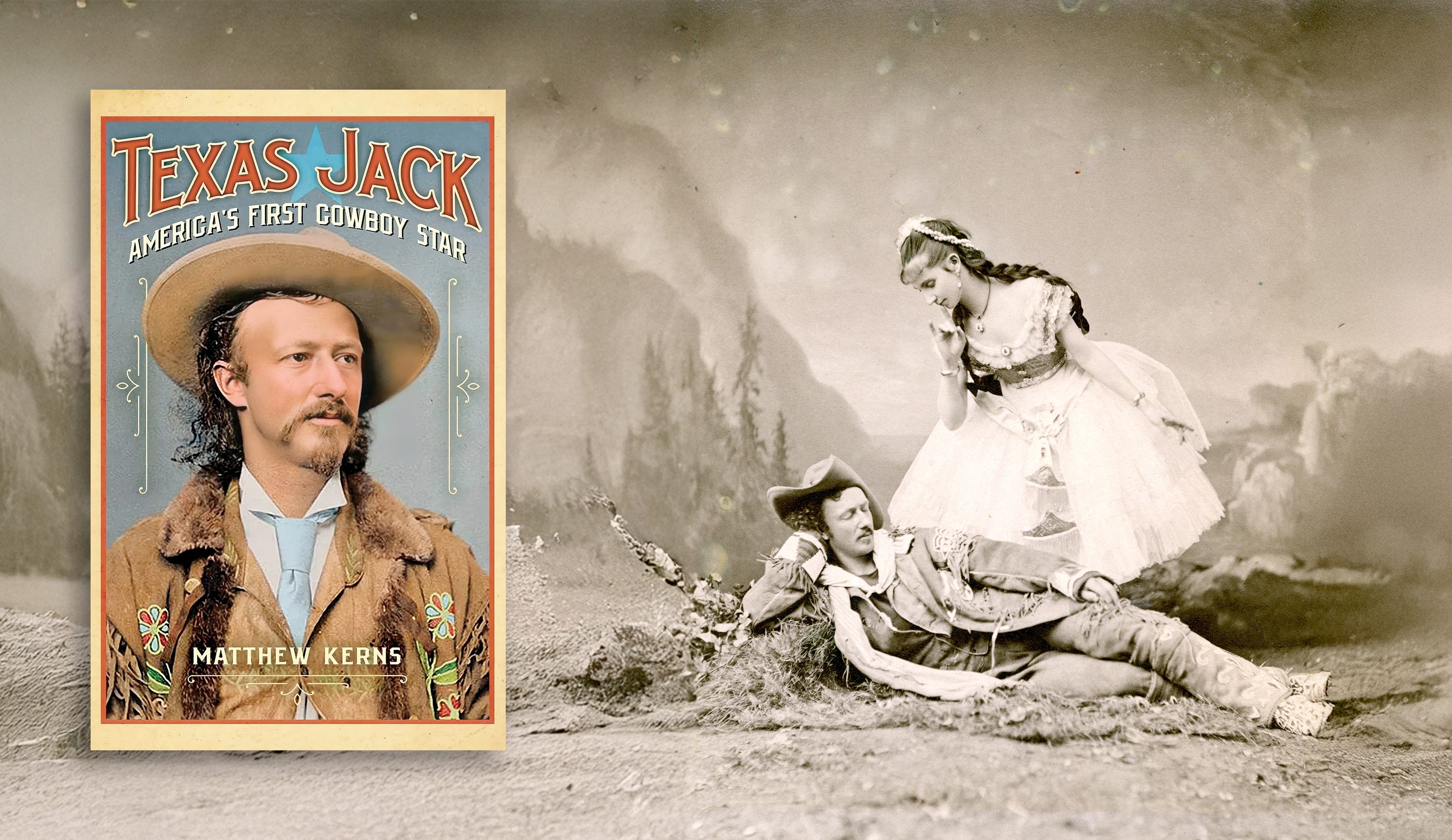
Texas Jack: America’s First Cowboy Star by Matthew Kerns, available at:
Amazon - https://amzn.to/3OrsjsW